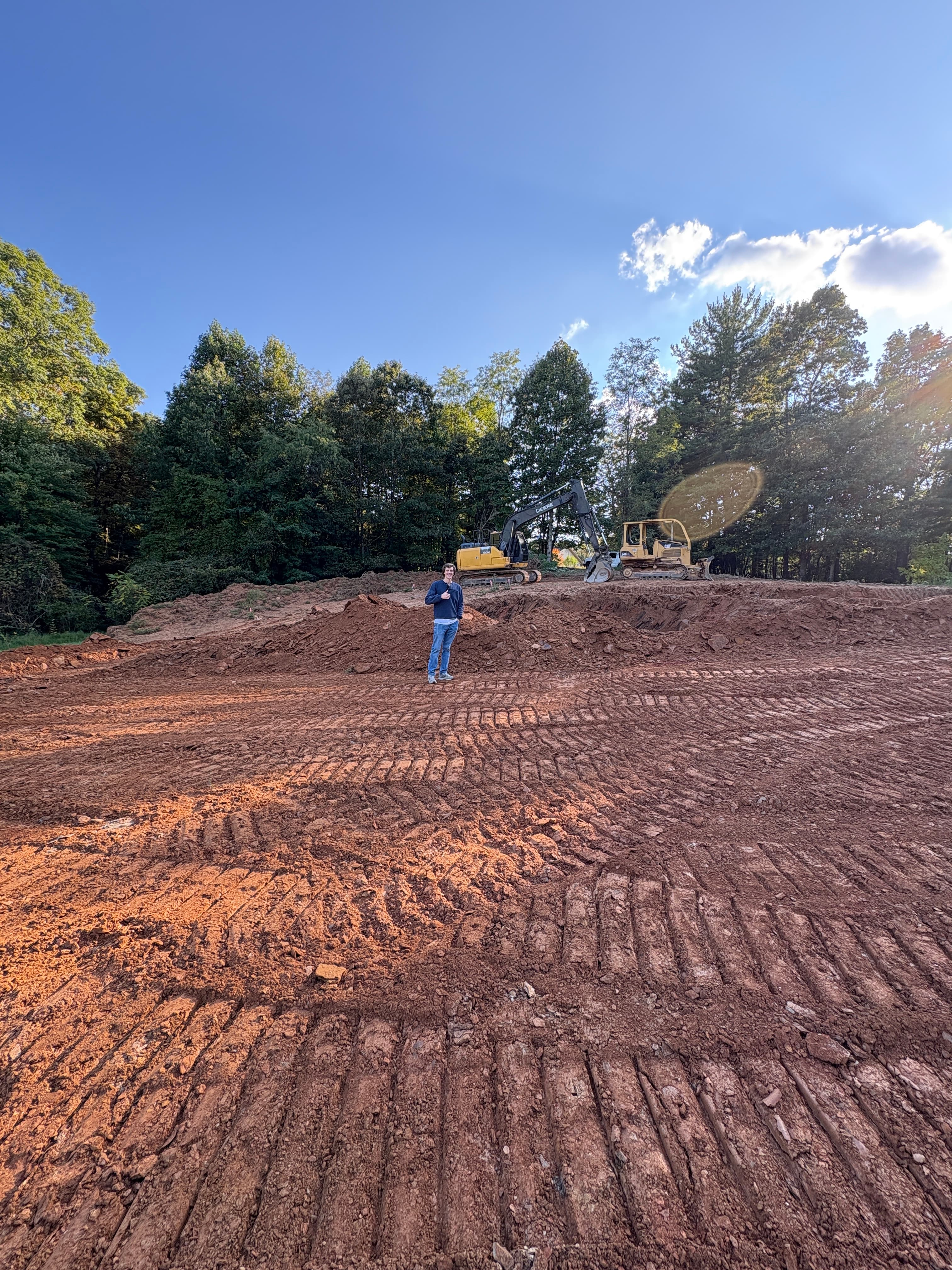
The hardest conversation in this business is telling someone that the land they already bought will not carry the house they imagined — or will, but at a cost nobody mentioned when they signed. Almost all of it is avoidable with due diligence done in the right order, before closing.
Start with wastewater, not the view
If a lot has no public sewer, everything depends on whether the soil will take a septic system — and that is decided by a soil evaluation, not by how the ground looks. North Carolina runs on-site wastewater through a three-permit sequence, and the first of those permits is the one that tells you whether you have a homesite at all.
- 1
Improvement Permit
The starting point. County environmental health staff evaluate soil depth, wetness, topography, and landscape position to determine whether the site can support a septic system and what type. Once soils are found suitable, the Improvement Permit is issued and is valid for five years.
- 2
Authorization for Wastewater System Construction
Issued once the house, driveway, and well locations are finalized and approved. This, together with a well permit where applicable, is required before you can apply for a building permit.
- 3
Operation Permit
Issued after the system is installed and inspected. The final step before the system can be used.
Confirm the jurisdiction before you research the rules
This one surprises people constantly. A parcel with an Asheville mailing address may sit inside Asheville city limits or in unincorporated Buncombe County — and those are different rulebooks, different steep-slope ordinances, different permitting offices, and sometimes different utilities. The same is true around Brevard, where sites inside the city’s jurisdiction carry an extra footing and setback inspection by the City of Brevard planning department before the county footing inspection.
Establishing which authority governs the parcel is the first research step, because it determines every answer that follows.
Access, easements, and the driveway nobody budgeted
- Is there legal, recorded access to a public road — not just a track someone has always used?
- If access crosses another property, is the easement recorded, and is it wide enough to build and maintain a driveway within?
- Can the grade be driven year round, and can concrete trucks, lumber deliveries, and a crane physically reach the building site?
- Who maintains a shared road, and is there a recorded agreement covering it?
- Where does driveway drainage go, and does it create a problem for a neighbor downhill?
Slope, stability, and hazard mapping
Slope drives cost, and past a threshold it drives regulation. In Buncombe County, development on existing grades of 36 percent or greater, or on land mapped as High Hazard or Moderate Hazard on the county’s Slope Stability Index Map, requires a geotechnical analysis by a North Carolina registered professional engineer, submitted before a building permit is issued. After construction the engineer must certify that their recommendations were actually followed.
This is a genuine cost and a genuine schedule item. It is also, handled properly, the thing that lets you build safely on ground that rewards you with a view for the next forty years.
Water, watershed, and stormwater
- Is there a public water tap available, and what does connection cost — or will you drill a well?
- A well requires its own permit, and its location has to be coordinated with the septic field and the house before any of them are fixed.
- Watershed protection overlays apply in parts of Henderson County; the zoning office will tell you whether a watershed permit is required for your parcel.
- Erosion control and stormwater permits may apply depending on how much ground you disturb.
- On valley-floor parcels near rivers and creeks, check floodplain mapping — this matters more across the region after the 2024 flooding.
A practical order of operations
- 1Identify the jurisdiction and zoning for the parcel.
- 2Order a soil evaluation and pursue the Improvement Permit — before closing where possible.
- 3Verify legal access and review recorded easements with your attorney.
- 4Check hazard and slope mapping to learn whether geotechnical work will be required.
- 5Confirm water source and utility availability, including any watershed or floodplain overlays.
- 6Walk the site with your builder to locate the house, driveway, well, and septic field together — they constrain one another.
- 7Only then commit to a plan and a house size.
Common Questions
Can I get a septic evaluation before I own the land?
Usually yes, with the seller’s permission, and it is worth asking for. Making an offer contingent on a satisfactory soil evaluation is common and protects you from the single most expensive surprise in mountain land buying.
How long is an Improvement Permit good for?
Once soils are found suitable and the Improvement Permit is issued, it is valid for five years. That gives most buyers room to design and plan without redoing the evaluation.
Does a steep lot mean I cannot build?
Rarely. It means engineering, and it means budgeting honestly for site work. Buncombe County requires geotechnical analysis by a licensed engineer above certain grades or in mapped hazard areas, which is a cost — but slope is also where the views are, and mountain builders build on it routinely.
What if the lot already has a septic permit from years ago?
Verify it is still valid and that it matches the house you intend to build — permits expire, rules change, and a permit sized for a three-bedroom house will not carry a five-bedroom one. Treat an old permit as a promising sign, not as an answer.
Sources
Regulatory details on this page come from the following. Rules change — verify against the current source before making a decision, and talk to us about your specific parcel.